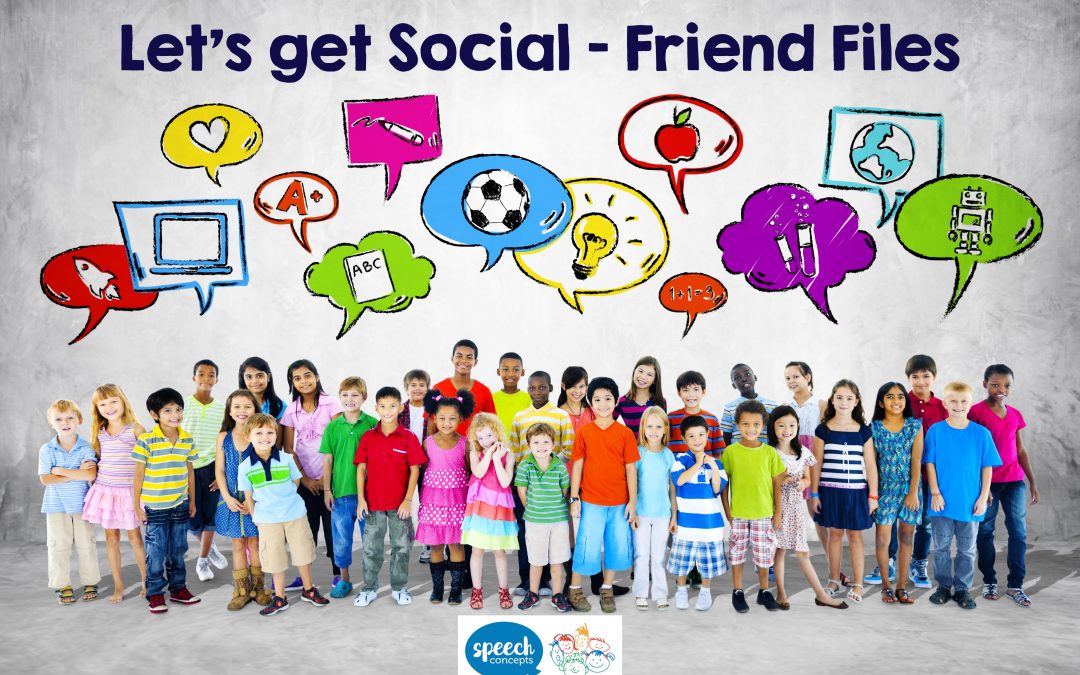
I love social thinking. Teaching social skills, following a social cognitive approach, is having a huge pay off for my clients. They are noticing, interpreting and navigating their social worlds without each scenario needing to be discussed. Our practice runs 15 groups a week – girl groups, boy groups, preschool to teenagers. So there is a lot of discussion happening in and around the clinic as we all prepare for our groups. When planning I have a broad yearly curriculum in mind but there are tweaks and changes depending on the goals of my group members. Term one is often centred around friendships. Kids have moved schools or are in different classrooms or configurations. Things have changed and there are new connections to be made.
I love this topic and as with being social, there are many facets and subtopics which can be discussed. To gather information about people you need to put your body and brain in the group (Social Thinking by Michelle Garcia Winner). Many of my clients, want to be chatting with their peers but when observed in the playground are nowhere near the people they want to chat with. Once we get their bodies and brains in the group, I talk about developing friend files to structure the collection of information. This is something we all do. When I catch up with a friend, I draw on my friend file about them to find what I know. I start a conversation by asking a question or comment using the information from my friend file. Children with social interaction difficulties don’t always have this information to draw on. So, they find it difficult to start a conversation. I like to start with how we collect information. We can ask, but we can also collect clues from the things we see them doing as well as their belongings. A Star Wars bag tag can offer up heaps of clues. To collect information kids also need to be listening and remembering. This can be challenging for some. So sometimes the start is telling them how important it makes their friends feel when they remember stuff about them. The next step is teaching them to convert this information into conversation starters, questions and comments. In addition to this, there is the subtle level of timing and appropriateness of the question to the situation. So much to work on! Once we get the starts sorted, we need to support them to keep the conversation going, which requires active listening. This is one of my favourite topics and allows us to focus on many important skills.

Finally, I have to share the fun I am having with my Teenagers group. This term we are heading out to where teenagers hang. We have one session in clinic, where we talk about where we are going the following week and the skills we need. Then we head out. We have visited cafes, McDonalds and have plans to go Bowling. It has been a great way to talk about social clues in context as well as practice our social chit chat in a ‘real’ environment.
That’s it for me. Keep having fun.


Recent Comments